A pull-up needs nothing but a bar and your own weight, so the question is usually not whether to train it, but what to hang the bar on.
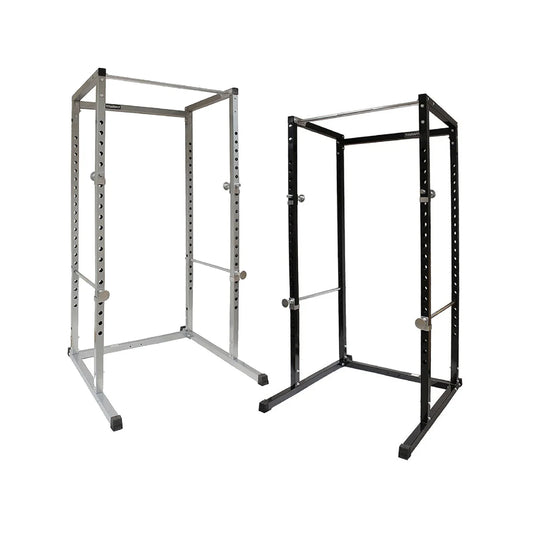
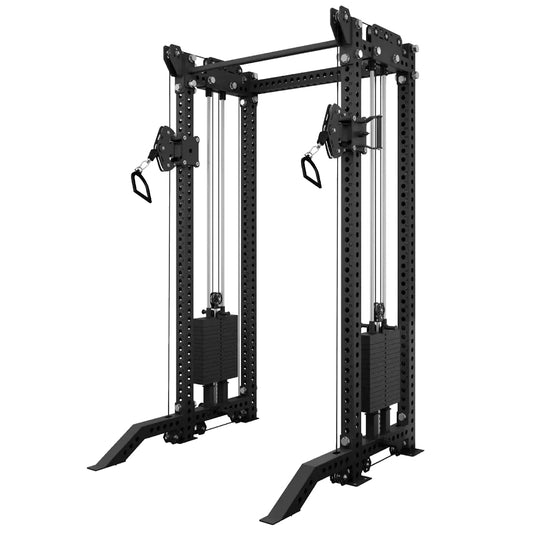
We sell three routes to a pull-up at home: a doorway pull up bar that mounts by leverage with no drilling, the G100 power rack, a four-post cage with a pull-up bar, and the Commercial Multi-Gym Rack, which adds a Smith machine and cable stacks around the same frame. For dips, rows and the rest of the bodyweight list, see functional training.
Which pull-up bar mounting should you choose?
Four mountings are in common use, and the right one is decided by your doorway, your walls and whether you can drill.
Leverage doorway bars sit against the frame and use your own weight to brace, so nothing is screwed into the wall. They go up in seconds and come down again, which suits a rented home. Check the frame width, depth and trim against the maker's instructions, check the user weight limit including anything you wear or hold, and check the bar is seated before every session. They are for controlled repetitions: no kipping, no swinging. UPVC frames, frames with no lip and damaged or loose architraves are not suitable.
Screw-in doorway bars fix brackets to the frame. Designs vary, so follow the maker's instructions for the fixings and the frame they are rated for, and expect to leave fixing holes behind.
Wall and ceiling-mounted bars fix into masonry or into timber joists and give the most clearance around the bar. Use the fixings the maker specifies for that substrate, into a verified load-bearing wall or joist; never into plasterboard alone, and get a competent installer if you are not certain what is behind the surface.
Free-standing frames and racks put nothing into your walls. A four-post cage gives a bar at a fixed height with the squat and bench area underneath, so one footprint covers pulling and pressing. Some frames must still be anchored or ballasted, and all of them have a permitted load and a permitted set of movements, so read the instructions before the first session.
Do I need a pull-up bar if I have a rack?
Not usually. A power rack with a pull-up bar already covers the movement. The reason people add a doorway bar anyway is placement: a bar in a hallway gets used in passing, and the sets you actually do beat the sets you plan.
Height, clearance and the floor
You need enough height for a full hang with your knees bent, head clearance above the bar through the whole movement, and clear space in front of and behind you. On a cage or a tower, check the footprint against the floor space you have with plates and a bench in place. Gym flooring under the frame protects the slab and keeps the feet from marking it.
Getting your first pull-up
Dead hangs, band-assisted repetitions and slow lowering from the top are the usual progression, in short sessions spread through the week rather than one long one. Rows and carries build pulling strength while the bar is still out of reach, and kettlebells cover both. The build a home gym guide sets out how a bar fits with the rest of a first kit.
Free delivery across Great Britain, including the Scottish Highlands and Islands, applies to every order, racks and cages included, and you have 180 days to return an order under our returns policy.


 Sold out