EVA Foam Puzzle Gym Flooring Mats, Interlocking, 4 to 48 Tiles

From £10.99

In stock
Order by 2pm Mon–Fri, dispatched same dayPay in 3 interest-free instalments of £128.33 with Klarna. 18+, T&Cs apply, credit subject to status. Late fees may apply.
Total £384.99 · 1 item
Free GB delivery · Order by 2pm · 180-day returns
Shipped weight 56 kg. Delivery to Northern Ireland is charged by order weight: see the weight bands.
Buying 10 or more, or for a gym? Request a trade quote
Cardio Machines
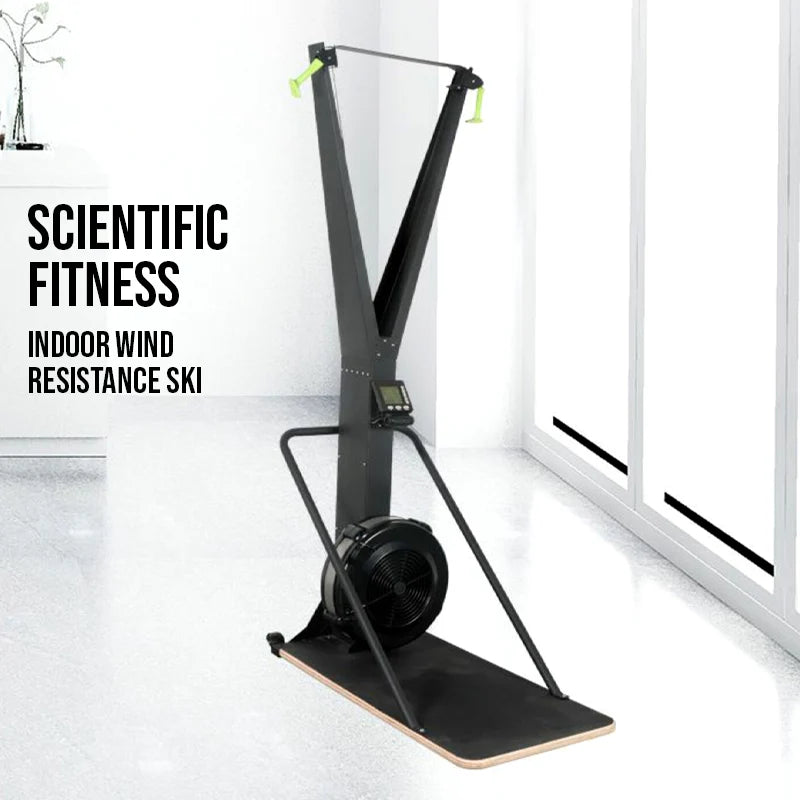
A ski trainer loads the lats, triceps, core and hips through a vertical pulling pattern, standing up, with no impact at all. It is one of the very few cardio machines that genuinely trains the upper body rather than just elevating heart rate.
Air resistance is self-scaling, which is what makes these machines work for everybody from a beginner to an elite athlete on the same setting. The harder you pull, the more air the fan has to move, so resistance rises with your effort automatically. There is no dial to set and no wrong resistance level, only the intensity you choose to apply.
The movement pattern is genuinely unusual among cardio equipment. Almost every other machine, from bikes to treadmills to rowers, is leg-dominant or horizontal. A ski trainer is a standing vertical pull driven by lat engagement and hip hinge, which makes it a strong complement to rowing rather than a substitute for it.
Ski trainers suit interval work exceptionally well: short maximal efforts of 20 to 60 seconds with recovery, or longer steady pieces for aerobic base. Because the movement is a hip hinge plus a vertical pull, it also reinforces the same mechanics used in deadlifts and pull-ups, making it useful active recovery on days between heavy lifting sessions.
Choose a ski trainer if you want upper-body-dominant conditioning, are managing lower-limb joint issues, or want variety alongside a bike or rower. Choose a rower if you want a single machine covering the largest muscle mass. If you want both patterns without two machines, the combined ski and rowing machine is worth considering.
How does air resistance work?
A fan moves air as you pull. The harder and faster you pull, the more resistance the fan generates, so the machine scales to your effort automatically.
Is it hard on the shoulders?
The movement is a controlled vertical pull driven mainly by the lats and hips. Keep the hinge in the hips rather than rounding the lower back, and shoulder loading stays manageable.
Is it good for beginners?
Yes, because resistance is entirely effort-dependent. A beginner pulling gently gets a light workout on exactly the same machine an athlete uses at maximum.
How much space does it need?
Less than a treadmill or rower, since the footprint is largely vertical. Check the stated dimensions and allow clearance for the pull-through.
Product Dimensions
Dimensions with Floor Stand
Product Weight
| With Top | |
|---|---|
| Depth | 40.6cm |
| Height | 216cm |
| Width | 52cm |
| Ski Machine + Floor Stand | |
| Width | 60cm |
| Depth | 127cm |
| Height | 216 cm |
| Ski Machine Weight | 21kg |
| Floor Stand Weight | 18kg |
Delivery, returns and warranty are answered in full on the delivery page, in the Help centre and on the warranty page.
| Category | Cardio and gym machines |
|---|---|
| Term | Statutory rights apply; manufacturer terms confirmed on request |
| Covers | Frame and structural parts, motors, consoles and electronics, cables and pulleys, moving parts under normal domestic use. This guarantee is given by LIFT SETS LTD, Unit at St. Helens, Merseyside, and does not affect your statutory rights under the Consumer Rights Act 2015. |
| Not covered | Wear items (belts, decks, grips, batteries), damage from incorrect assembly or power supply, use in commercial settings unless quoted. Exclusions never remove your statutory rights: a fault that was present at delivery is covered whatever the exclusions say. |
| How to claim | Email support@liftsets.co.uk with your order number, a description of the fault and two or three photos or a short video. We reply with the next step: replacement part, repair, replacement or refund. Damage or shortages on arrival are a delivery claim, not a warranty claim: tell us as soon as you can. |
Your statutory rights under the Consumer Rights Act 2015 apply in full: up to 30 days to reject a faulty item for a refund, then repair or replacement, and for six months a fault is presumed to have been present at delivery. Full details: Warranty.
From £10.99
From £7.99
From £31.99